


Kilograms to Grams Converter (kg to g) – Accurate Weight Tool
Convert kilograms to grams (kg to g) or grams to kilograms (g to kg) with live calculations, dynamic formula breakdown, cooking presets, and complete reference milestones.
Live kg ⇄ g Metric Converter
How to Convert Kilograms to Grams
In the International System of Units (SI), the kilogram (kg) is the primary base unit of mass. A gram (g) is defined as exactly one-thousandth of a kilogram. Because this relationship is founded upon the decimal base-10 structure, transitioning from kilograms to grams is straightforward and entirely free from estimation error.
The Exact Mathematical Multiplication Formula
To calculate how many grams are in any given kilogram quantity, multiply the number of kilograms by 1,000:
For reverse calculation from grams to kilograms, divide by 1,000 using our companion Grams to Kilograms Converter.
💡 The 3-Decimal-Place Right Shift Rule
Because 1,000 has three zeros, you can execute this calculation in your head in under two seconds: simply shift the decimal point 3 places to the right:
- 2.45 kg → shift 3 places right (add trailing zero) → 2,450 g
- 0.08 kg → shift 3 places right → 80 g
- 1.75 kg → shift 3 places right → 1,750 g
- 0.005 kg → shift 3 places right → 5 g
Step-by-Step Practical Example
Suppose you purchase 1.25 kilograms of fresh coffee beans, and you want to portion them into 250-gram storage jars:
- Identify the starting value in kilograms:
1.25 kg. - Multiply by the metric factor 1,000:
1.25 × 1,000 = 1,250. - Confirm the unit:
1,250 grams. - Divide by 250 g to find the portion count:
1,250 ÷ 250 = 5 jars exactly.
Kilograms to Grams Conversion Table
Reference this conversion chart covering everyday weights from 0.1 kg up to 50 kg industrial milestones:
| Kilograms (kg) | Grams (g) | Pounds (lb) | Ounces (oz) | Everyday Reference |
|---|---|---|---|---|
| 0.1 kg | 100 g | 0.2205 lb | 3.5274 oz | Standard chocolate bar / 1/10 kilo |
| 0.25 kg | 250 g | 0.5512 lb | 8.8185 oz | Block of butter (quarter kilo) |
| 0.5 kg | 500 g | 1.1023 lb | 17.6370 oz | Half a kilogram / standard pasta pack |
| 0.75 kg | 750 g | 1.6535 lb | 26.4555 oz | Artisan bread loaf / standard wine bottle contents |
| 1 kg | 1,000 g | 2.2046 lb | 35.2740 oz | 1 Liter of pure water / bag of sugar |
| 1.5 kg | 1,500 g | 3.3069 lb | 52.9110 oz | Average whole roasting chicken |
| 2 kg | 2,000 g | 4.4092 lb | 70.5480 oz | International airmail small packet limit |
| 2.5 kg | 2,500 g | 5.5116 lb | 88.1850 oz | Standard grocery bag of potatoes |
| 5 kg | 5,000 g | 11.0231 lb | 176.370 oz | 5 kg gym plate / kettlebell / watermelon |
| 10 kg | 10,000 g | 22.0462 lb | 352.740 oz | Standard European airline cabin carry-on suitcase |
| 20 kg | 20,000 g | 44.0924 lb | 705.479 oz | Olympic men’s barbell bar |
| 23 kg | 23,000 g | 50.7063 lb | 811.301 oz | Standard international airline checked bag limit |
| 50 kg | 50,000 g | 110.231 lb | 1763.70 oz | Industrial sack of concrete / adult bodyweight milestone |
Why the Metric System Uses 1,000
Unlike the Imperial or US Customary systems — which rely on seemingly arbitrary factors like 16 ounces per pound, 14 pounds per stone, or 2,000 pounds per short ton — the Metric System (formalized as the International System of Units or SI) was designed from the ground up during the late 18th century French Enlightenment to be completely rational and universal.
The Etymology of the Prefix “Kilo-”
In 1795, French scientists established standard prefixes derived from classical languages to denote multiples and fractions:
- Greek roots for large multiples: The prefix kilo- is adapted from the ancient Greek word chilioi (χίλιοι), meaning exactly one thousand (1,000).
- Latin roots for fractions: Smaller units use Latin-derived prefixes: milli- (one-thousandth: 0.001), centi- (one-hundredth: 0.01), and deci- (one-tenth: 0.1).
Universal Symmetry Across All Physical Dimensions
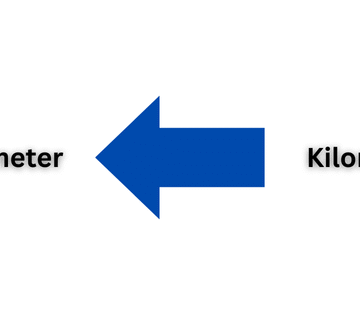
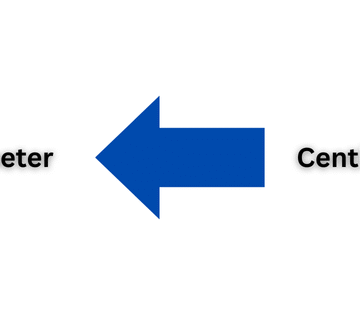
The genius of the 1,000 multiple is that it carries across all scientific measurements without having to memorize unique conversion constants:
Furthermore, 1 liter of pure liquid water at 4°C has a mass of almost exactly 1 kilogram (1,000 grams), unifying mass and volume into a seamless scientific framework.
Frequently Asked Questions (FAQ)
How many grams make 1 kilogram?
Exactly 1,000 grams make 1 kilogram. The relationship is fixed and standardized worldwide by international treaty (SI units).
How do I convert kilograms to grams quickly in my head?
Multiply the number of kilograms by 1,000, which is the same as moving the decimal point 3 places to the right. For instance, 3.5 kg becomes 3,500 g, and 0.4 kg becomes 400 g.
Is 0.5 kg the same as 500 grams?
Yes. 0.5 kg × 1,000 = 500 grams. This quantity is commonly termed “half a kilo” across culinary recipes and grocery food packaging.
How much is 1 kg in pounds and ounces?
1 kilogram equals approximately 2.20462 pounds (or 2 lbs 3.3 ounces). If you need bodyweight or airline luggage conversions, visit our Kilograms to Pounds Converter.
How many milligrams are in a kilogram?
Since 1 gram has 1,000 milligrams, and 1 kilogram has 1,000 grams, 1 kilogram contains exactly 1,000,000 milligrams (one million mg).


No comment